
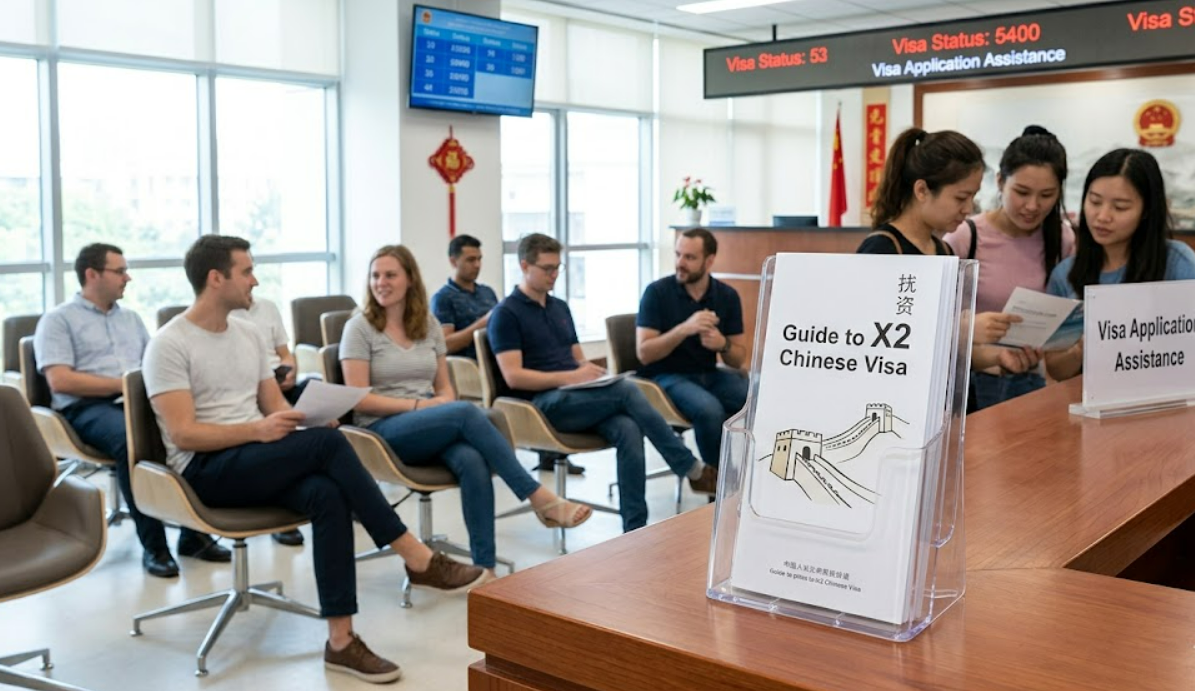
The Ultimate Guide to Securing Your X2 Visa for Chinese Language Study
So, you’ve decided to finally take the plunge and study Mandarin in China. That is incredibly exciting. But if you’re like most students, the excitement quickly takes a backseat the moment you look at the paperwork. Navigating Chinese student visas can feel like trying to read ancient script without a dictionary.
Here is the quick answer you need right now: If you plan to enroll in a Chinese language program that lasts six months (180 days) or less, you need to apply for an X2 visa for Chinese language study. It is a single-entry visa designed specifically for short-term students, and getting it requires two non-negotiable documents from your school: the Admission Notice and the JW202 (or DQ) form.
Let’s face it, trying to figure out the application process, processing times, and paperwork requirements on your own can be an absolute headache. Let’s break down exactly how to get your X2 visa for Chinese language study without the usual bureaucratic nightmares.
What Exactly is the X2 Visa for Chinese Language Study?
Look, let’s keep it simple. The X2 visa for Chinese language study is China’s short-term student visa. It is tailored for people who want to fast-track their Mandarin skills through intensive summer programs, a single semester university course, or private language school bootcamps.
Unlike regular tourist visas (L visas), the X2 visa formally recognizes you as a student. This means you are legally allowed to enroll in an educational institution.
But here is the thing: The X2 visa is almost always a single-entry visa.
What does that mean for you? It means that once you land in Beijing, Shanghai, or wherever your campus is, you cannot leave mainland China for a weekend trip to Hong Kong, Tokyo, or Seoul and expect to just wander back in. The moment you step across the border out of mainland China, your visa expires. If you want to travel outside the mainland during your studies, you will need to apply for a re-entry permit from the local Exit and Entry Administration once you arrive, but that is never a guarantee. Plan your regional travel for after your program ends.
X1 vs. X2 Visa: Which One Do You Actually Need?
This trips up a lot of people. The Chinese government splits student visas into two distinct buckets based entirely on time.
| Feature | X1 Visa | X2 Visa |
| Duration of Study | Greater than 180 days (Long-term) | 180 days or less (Short-term) |
| Entries Allowed | Multiple entries (After Residence Permit) | Usually Single-entry only |
| Post-Arrival Requirement | Must convert to a Residence Permit within 30 days | No conversion needed; stay up to the duration granted |
| Medical Exam | Required | Usually not required |
Think of it this way: if you are doing a full academic year or a multi-year degree, you are in X1 territory. If you are doing a 4-week summer crash course or a standard 4-month semester, the X2 visa for Chinese language study is your target.
The Ultimate Document Checklist
Before you schedule an appointment at the Chinese embassy or visa application center (like CVASC), you need your paperwork perfectly aligned. If even one date or name doesn’t match your passport, they will hand it back to you.
Here is what you need to gather:
- Your Original Passport: It must have at least 6 months of validity remaining and at least two blank visa pages.
- The Visa Application Form & Photo: You will fill out the COVA (China Online Visa Application) form online. You need a recent, bareheaded, full-face passport photo against a white background. Don’t smile, and make sure your ears are visible.
- The Admission Notice: This is the official letter from your Chinese university or language provider confirming they have accepted you.
- The JW202 Form (or the new DQ Form): This is the official government form issued by the Chinese Ministry of Education. Your school applies for this on your behalf and sends it to you. Note: Digital copies are widely accepted now, but keep the original safe.
- Proof of Legal Status (If applicable): If you are applying for the visa in a country that isn’t your place of citizenship, you need to show your valid visa or residence permit for that country.
Step-by-Step Application Process
Let’s be honest: visa applications are boring, but missing a step costs you time and money. Here is the exact roadmap to follow.
Step 1: Secure Your Enrollment
You cannot apply for a student visa without a school. Enroll in a certified language program. Once your deposit or tuition is sorted, the school will mail or email your Admission Notice and the JW202/DQ form. This can take anywhere from two to six weeks, so budget your time wisely.
Step 2: Fill Out the Online COVA Form
Head over to the official China Online Visa Application portal. Take your time here. Ensure your name exactly matches the machine-readable zone at the bottom of your passport. Under “Purpose of Visit,” select “Short-term student (X2).”
Step 3: Book Your Appointment
In most countries, you cannot just walk into the embassy anymore. You need to book an appointment slot through the Chinese Visa Application Service Center website. Print out your confirmation page.
Step 4: Submit Your Application and Pay the Fee
Bring all your physical documents to your appointment. They will verify your paperwork and take your fingerprints. The cost varies significantly depending on your nationality (for instance, US citizens pay a flat rate of $140 due to reciprocity agreements, while other nationalities pay varying amounts).
Step 5: Collect Your Passport
Processing usually takes about 4 to 5 business days. When you get your passport back, look closely at the visa sticker. Check the “Enter Before” date and the “Duration of Each Stay” to ensure it aligns perfectly with your study plans.
Crucial Pitfalls to Avoid
We have seen it all. Here are the three most common mistakes that leave students stranded at the airport.
1. The “Duration of Stay” Confusions
Your X2 visa will state a specific number of days for your stay—usually 90, 120, or 150 days. Your stay begins the exact day you pass through Chinese immigration, not the day the visa was issued. Do not overstay by even a single day. The fines are heavy (up to 500 RMB per day), and it can seriously jeopardize your chances of ever returning to China. Learn Chinese in Beijing
2. Trying to Work Legally on an X2 Visa
Let’s face it, living in cities like Shanghai or Shenzhen can get pricey, and teaching English on the side sounds tempting. Don’t do it. It is strictly illegal to work or take paid internships on an X2 student visa. If you are caught, you face steep fines, potential detention, and deportation.
3. Miscalculating the Single-Entry Rule
If you fly into Shanghai, study for two months, and decide to take a quick vacation to Hong Kong for the weekend, your X2 visa dies the moment you leave Shanghai. To get back to your school, you would have to apply for a brand new visa from Hong Kong. Save the regional travel for the end of your trip.
Frequently Asked Questions
Can I extend my X2 visa while inside China?
Yes, it is possible, but it depends heavily on your school and the local Public Security Bureau (PSB). If you decide to extend your language study for another semester, your school must provide a new enrollment extension letter and an official request to the PSB. You must apply for the extension at least 7 days before your current visa expires.
Do I need a medical physical exam for an X2 visa?
Generally, no. The Foreigner Physical Examination form is a strict requirement for the long-term X1 visa because it is required to get a Residence Permit. For the short-term X2 visa, embassies rarely ask for it, though it is always smart to double-check your local embassy’s specific updates. Business Internships In China
Can I change a tourist visa (L) into an X2 visa after I arrive in China?
Historically, this was a massive headache and usually rejected. While some local immigration offices in major cities are occasionally more flexible if you have a valid JW202 form, you should never rely on this. It is highly recommended to secure your proper X2 visa before you board your flight.
Ready to Start Your Chinese Language Journey?
Getting your visa documentation sorted is the final hurdle before your feet hit the ground in China. It requires attention to detail, but once that sticker is in your passport, you are cleared for an incredible, immersive experience.
If you want to skip the stress of dealing with university bureaucracies, securing accommodation, and figuring out government forms on your own, we can handle the heavy lifting for you. From securing your official JW202 paperwork to matching you with elite university programs and homestays, we ensure your transition is seamless.
Get in touch with Go Abroad China today to find the perfect language program and lock down your visa paperwork with absolute confidence.